A practical guide to eBay search: use short keywords, operators, filters and sort options to find better listings and real bargains.
Written by
Jason
Published on
July 11, 2026
Key takeaways
Search with two to four specific keywords (brand, item type, size), not a full sentence, because eBay treats every word as a required match in listing titles.
Use operators in the search box: quotes for an exact phrase, a minus sign to exclude words, and parentheses for either/or terms. The asterisk wildcard was dropped in 2012 and no longer works.
If results are too sparse, switch the category to "All Categories" and tick "Include description" so eBay also reads listing bodies, not just titles.
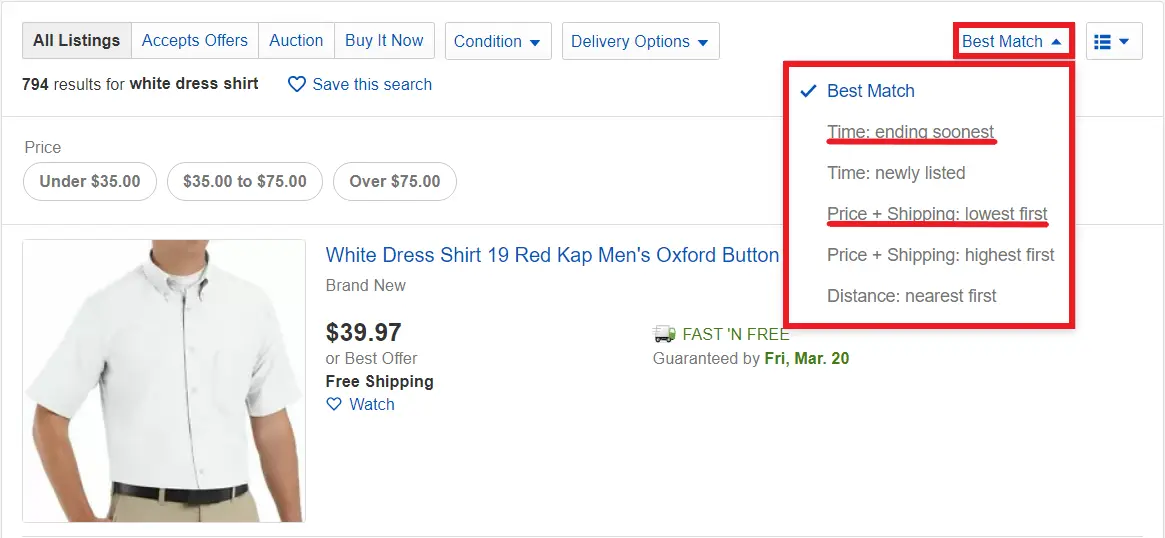
Move off the default "Best Match" sort: use "Time: ending soonest" for closing auctions and "Price + Shipping: lowest first" to rank by true total cost.
For an effective eBay search, stick with two to four specific keywords like brand, item type, or size, instead of typing a full sentence. By default, eBay matches words in listing titles only, so extra words like "in great condition" or "for sale" can reduce your results. Use the left-side filters (condition, price, brand, item location) to refine your search, and sort by options other than Best Match. For deals, sort by "Time: ending soonest" to catch auctions about to end or "Price + Shipping: lowest first" to show true total costs. This guide will walk you through each step, including operators and Advanced Search tools most buyers overlook.
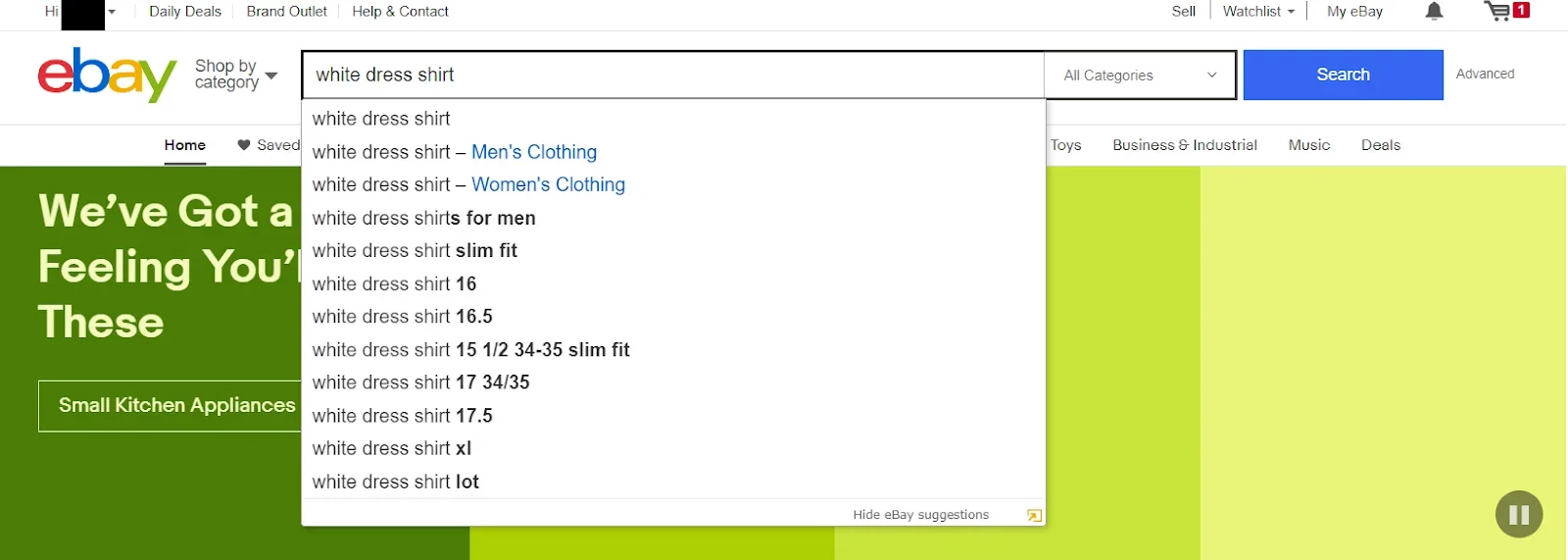
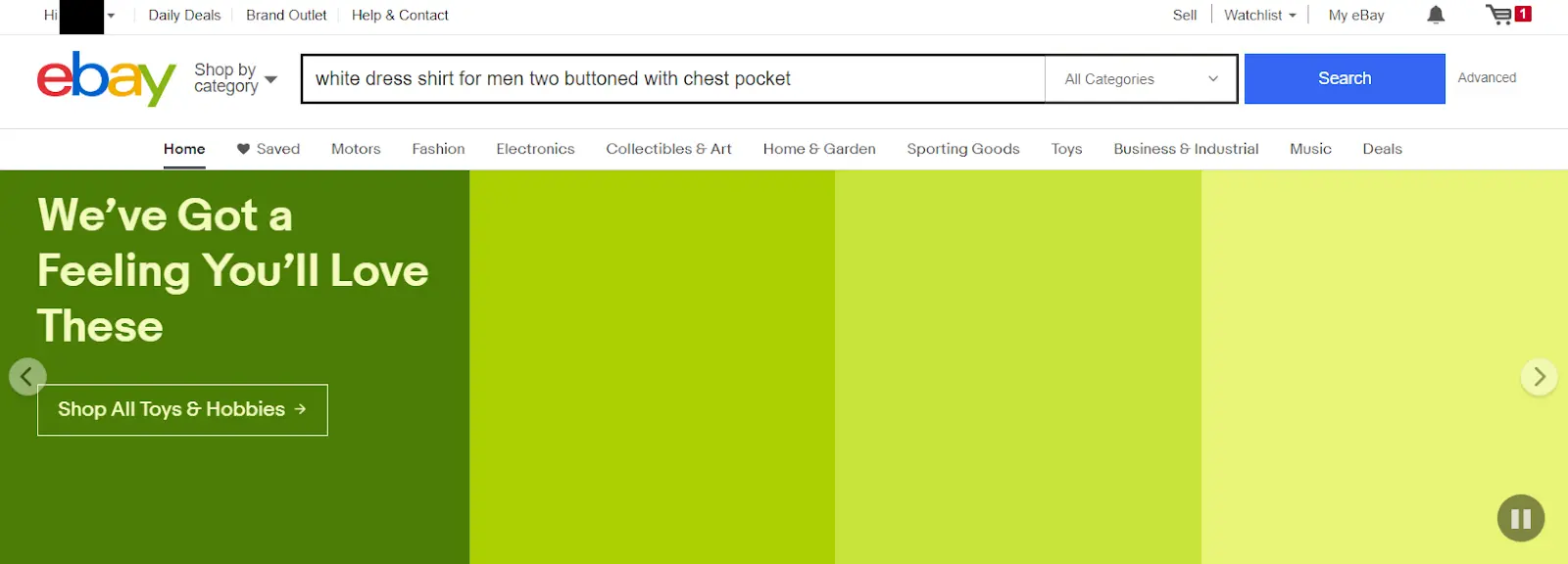
The eBay search box works by matching keywords, not answering questions. Each word you add becomes a requirement, so adding more words means fewer results. Search for "Nike Air Max 90" and you'll get thousands of listings. Try "good condition mens Nike Air Max 90 size 10 for sale" and you'll likely see fewer results because sellers rarely use that exact phrasing in titles.
A short keyword search returns far more results than a full sentence.
Start with broad keywords, then refine your search. Begin with the brand and item type, check your results, and add another word only if you have too many listings to review. Be mindful of spelling: eBay corrects some typos but not all. A misspelled term like "addidas" might hide listings others miss, sometimes giving you a quieter path to underbid items.
eBay offers a limited set of search operators that filter results before you even use the sidebar. These operators function in the main search box on both desktop and mobile web.
Search operators that still work in 2026
Operator
What You Type
What It Does
Quotes
"north face nuptse"
Matches the exact phrase in that order, not scattered words.
Minus sign
iphone -case -cable
Excludes listings with "case" or "cable" (handy for finding phones without accessories).
Parentheses
(hoodie,sweatshirt)
Finds listings with either word, no space after the comma.
Asterisk
levi*
No longer supported. eBay dropped wildcard search in 2012, so the asterisk is ignored and may reduce results.
You can combine these operators. For instance, "north face" (jacket,coat) -kids -toddler retrieves adult North Face jackets or coats, excluding children's items. Operators handle the complex filtering newbies often try with extra words, which is why they provide more useful results, not less.
If your search results are sparse, two settings can expand them.
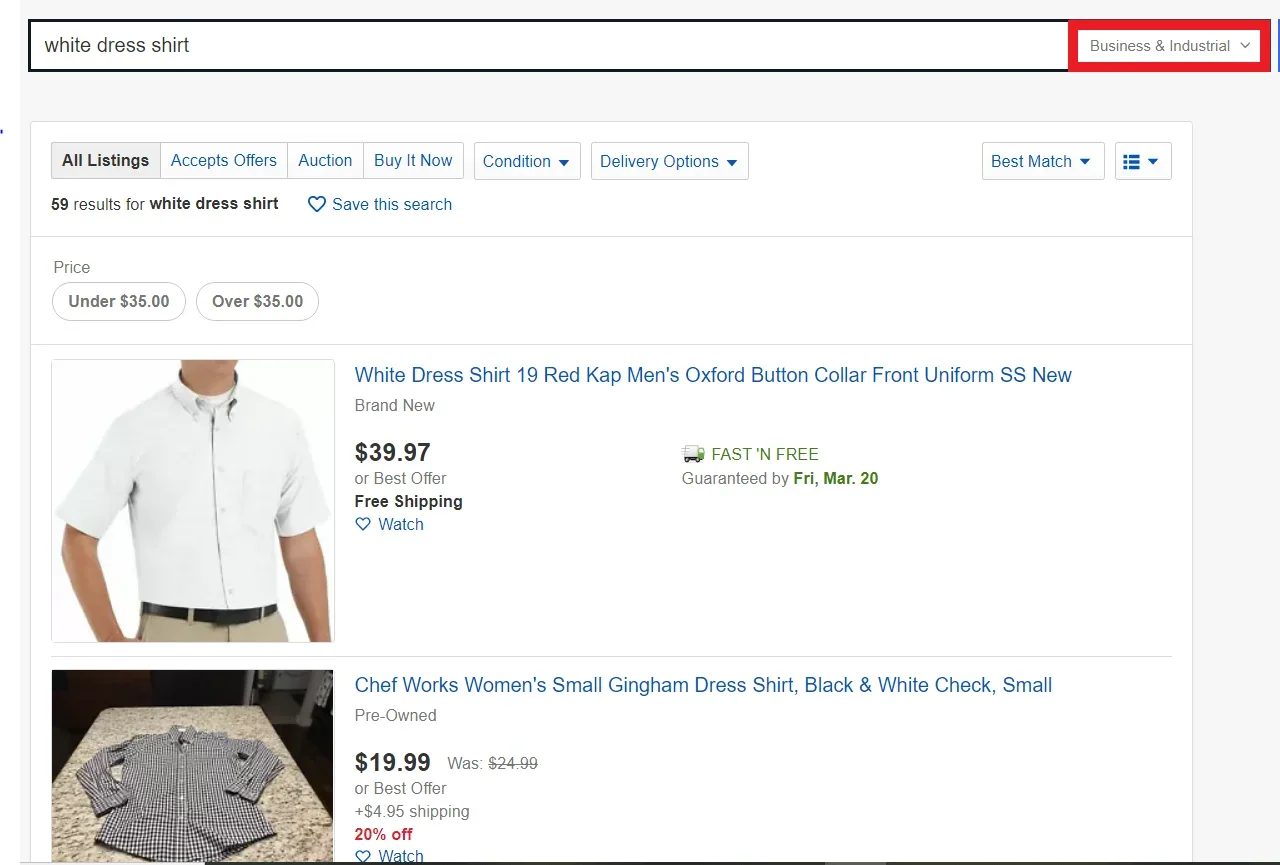
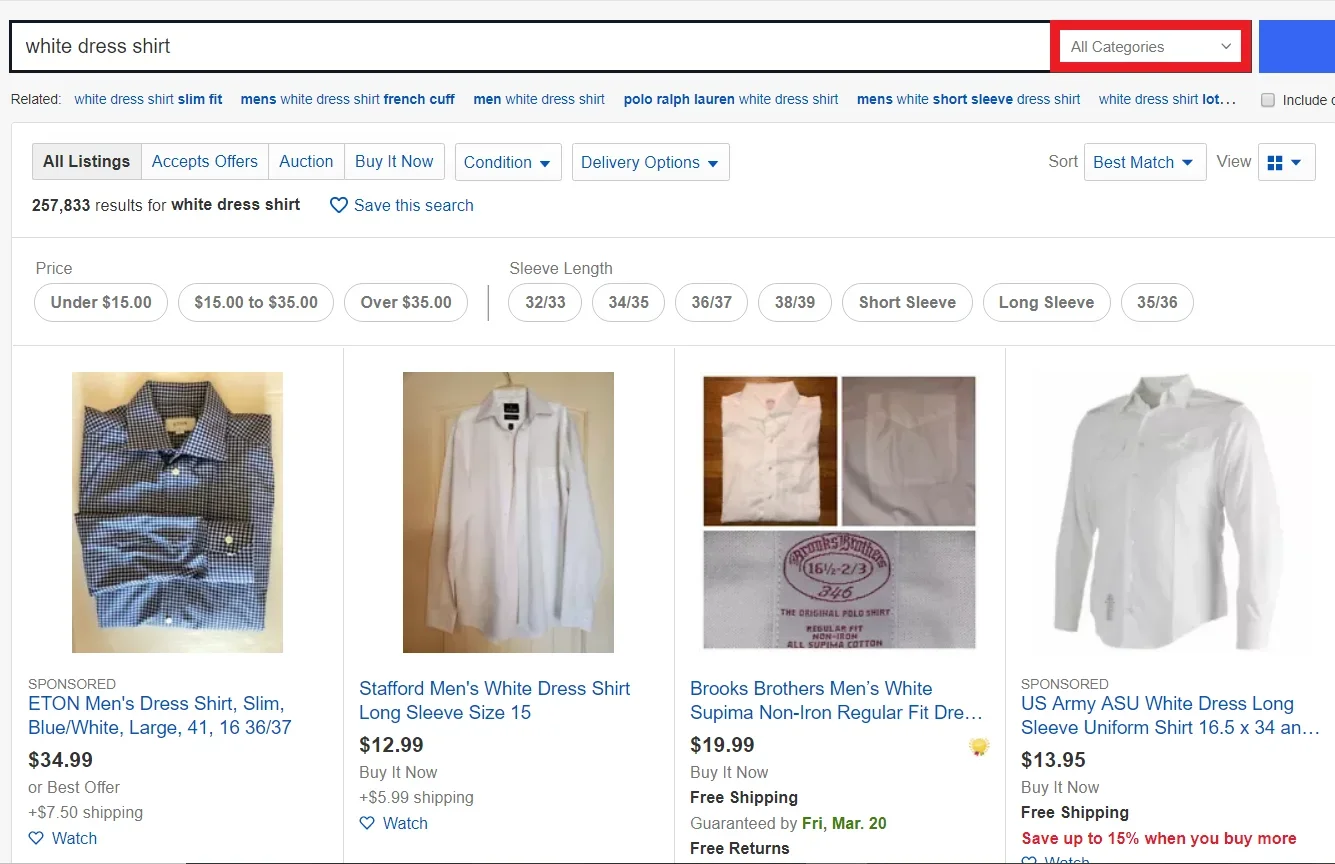
Adjust the category. eBay places you in the category it assumes fits best when you start a search. This is useful when correct but limiting if not. To cover all bases, switch the category dropdown near the search box to "All Categories" and search again. Items listed under an unexpected category will appear.
Include description. A default search only reads listing titles. Scroll to search options and check "Include description" for eBay to examine the listing's full text. Seller often note things like measurements, flaws, and model numbers in descriptions instead of titles, bringing in matches that title-only searches miss. Expect more results and a bit more noise.
Tick "Include description" to search listing bodies, not just titles.
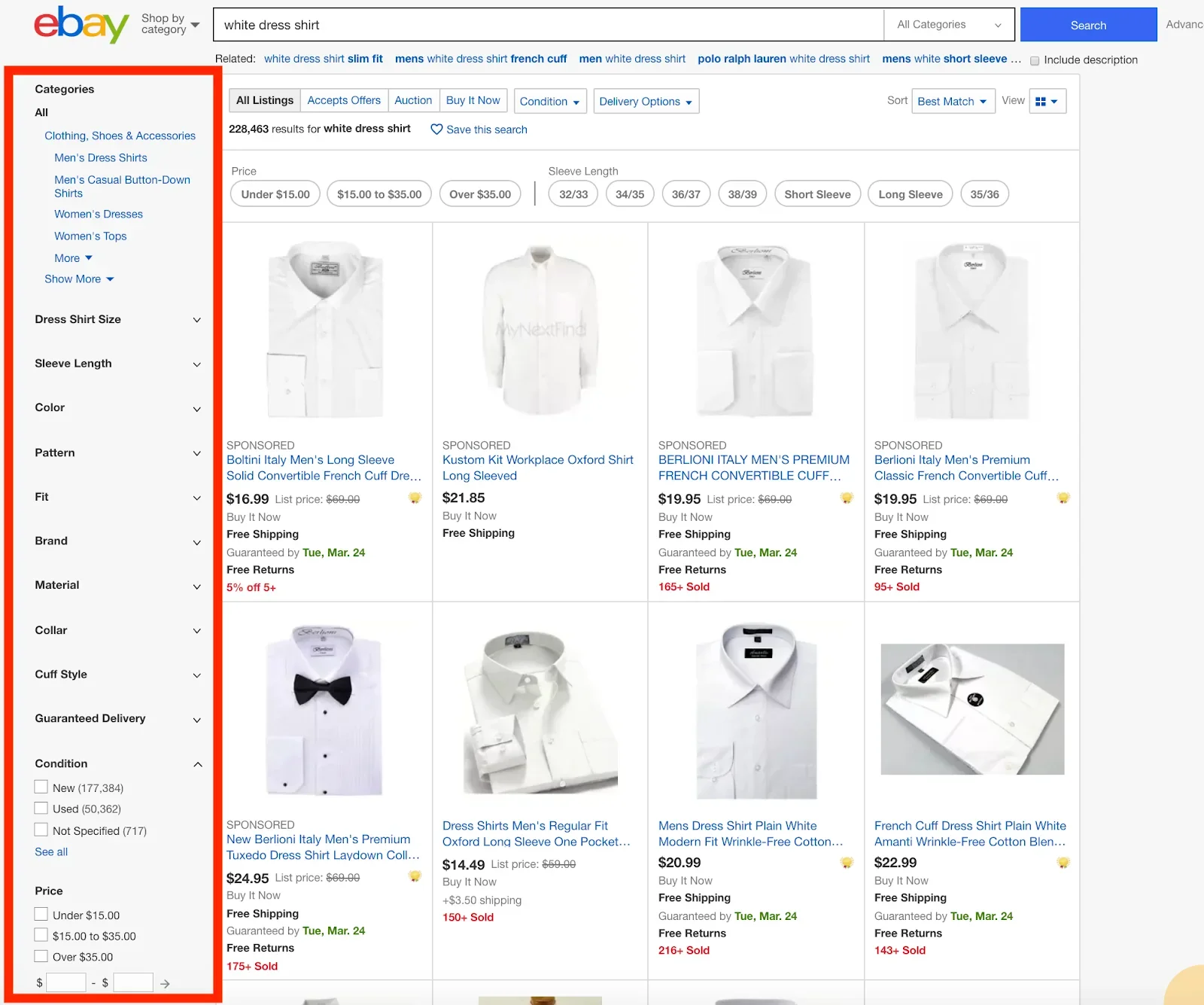
Once you've got your results, use the filters on the page's left side (or the "Refine" panel on mobile) to hone a broad search into something more specific. Key filters include:
Condition: New, Open box, Used, or For parts. Choose "Used" for resale finds and "For parts" for potential repairs.
Price range: Set minimum and maximum prices to skip both junk and overpriced items.
Item location and shipping: Filter to your country to avoid long delivery times and customs fees.
Buying format: Auction, Buy It Now, or Best Offer. Auctions reward patience; Best Offer allows negotiation.
Brand and size: For clothing and shoes, these filters are based on item specifics in listings and are more reliable than typing the size into the search box.
eBay defaults to "Best Match" sorting, which mixes relevance, seller performance, and price. While it's okay for browsing, it's not ideal for finding bargains, as it hides listings that are ending soon or lowest priced. Adjust your sorting using the dropdown in the top-right corner of your results.
Time: ending soonest brings up auctions near closing, where a last-minute bid might win cheaply.
Price + Shipping: lowest first ranks by total cost, placing an item with $20 shipping lower where it belongs.
Newly listed shows new items first, important for hot items that sell fast.
Switch the sort order to find ending and low-priced listings.
Instead of searching from scratch daily, use eBay's tracking features.
Add to Watchlist keeps track of a single listing. eBay will alert you to price changes on fixed-price items and notify you before an auction ends, allowing you to bid strategically at the last moment, rather than early and driving up the price.
"Add to Watchlist" tracks a listing and alerts you before it ends.
Save this search keeps the entire query and filters intact. eBay will email you when new listings match, which is the quickest way to catch good deals as soon as they're posted. Look for this option near the top of the results page once you're signed in.
The Advanced Search page allows for detailed item and seller searches in one form. Access it via the eBay search bar settings or directly at the eBay Advanced Search page. Use it to do things beyond the main box, like searching sold and completed listings to see what items actually sold for, narrowing results to a specific seller's store, filtering by exact price range, or searching listings from another country.
Open Advanced Search from the link beside the main search box.
Checking sold listings is one of the best habits for buyers and sellers. It gives you the going rate before you bid, so you know if a deal is truly a bargain. For a detailed look at these features, see our guide on eBay Advanced Search tips and tricks.
The strategies explained here show how buyers find listings, which should guide how you write yours. Buyers look for brand, item type, and size, so put those in your title and use item specifics fields to make sure the brand and size filters catch your listing. For clothing, use an accurate size chart in the listing to answer the most common buyer questions and reduce returns that cut into profits. Sizely lets you create a brand-styled size chart from over 300 garment templates, suitable for eBay, Poshmark, or Mercari listings. It's used by more than 85,000 sellers and offers a free tier.
Usually, it's because you've used too many words. eBay sees every word as necessary, so a long phrase only returns listings with all those exact words. Reduce it to two or three keywords, ensure the category dropdown is "All Categories", and enable "Include description" to also search listing bodies.
Place the phrase within straight quotation marks, like "the north face nuptse". This ensures eBay matches the words in that order, ignoring listings where they're separated or rearranged.
Run your search, then select "Sold items" in the left-side filters, or use the Advanced Search page and check "Sold listings". This shows what similar items have actually sold for, providing the best way to assess current listing prices.
Best Match is eBay's default sorting method that combines keyword relevance, seller performance, pricing, and listing quality. It's designed for general browsing but isn't great for bargain hunting. Switch to "Time: ending soonest" or "Price + Shipping: lowest first" when searching for deals.
Go to the seller's store page and use its search box, or use the eBay Advanced Search page and input the seller's username under "Specific sellers". Both methods limit results to that seller's items.
Buyers skip listings when they cannot tell if it fits. Make a size chart image for your listings in about a minute with the free Size Chart maker, and check your margins with the eBay fee calculator. Selling from the UK? The eBay UK fee calculator covers Buyer Protection and business fees.
Run your own store too? Sizely's size tools tell shoppers their size right on your product pages.
Guides on how to measure yourself, read a brand's size chart, and convert sizes between brands and countries, so you order the right size the first time.
The average men's ring size is a US 9 to 10, about 59.5 to 62.1 mm around the finger. Here is the full size chart, a printable sizer diagram, and a step-by-step at-home method to measure your ring size without a jeweler.
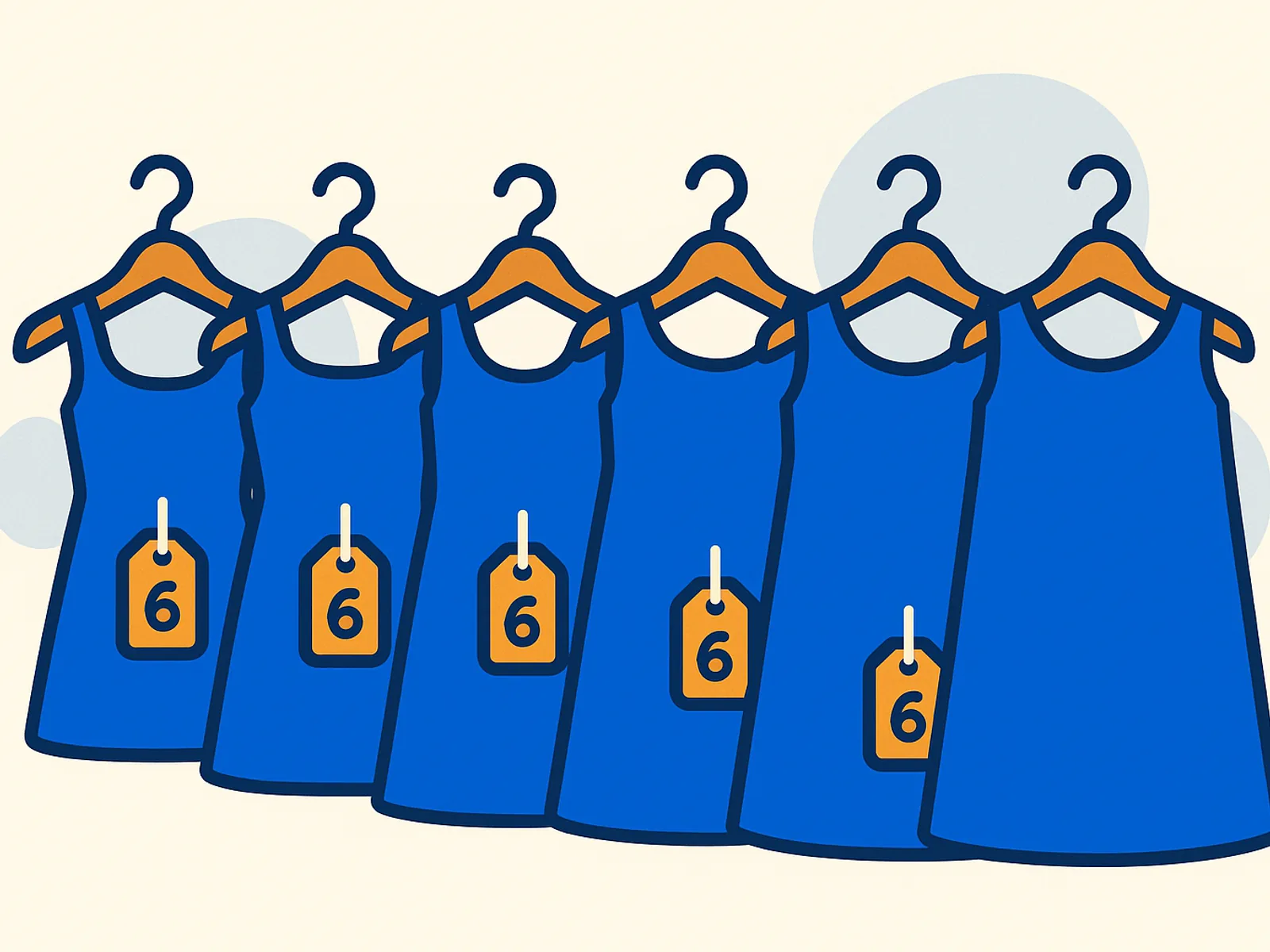
We pulled the official size charts of six major brands. The same size 6 has a different bust, waist, and hip at each one. Here is the data, and how to cope.