
Selling Tips
How to Cancel Your eBay Order as a Seller
A seller's guide to canceling an eBay order, including the Seller Hub steps, the 30-day window, fee credits, and which reasons avoid an account defect.
Jason
July 11, 2026

Block a problem buyer on eBay in four steps, then set buyer requirements so you rarely have to. Includes a threshold-setting framework and how clearer listings cut the fit returns that create problem buyers.

Written by
Sophie Clipton
Published on
July 11, 2026
Key takeaways
Last updated: 14 June 2026. Update note: eBay has shifted the buyer-management tools to Seller Hub and removed the old "Don't have a PayPal account" filter since switching to managed payments, so that requirement is gone. This guide now matches the current Seller Hub layout.
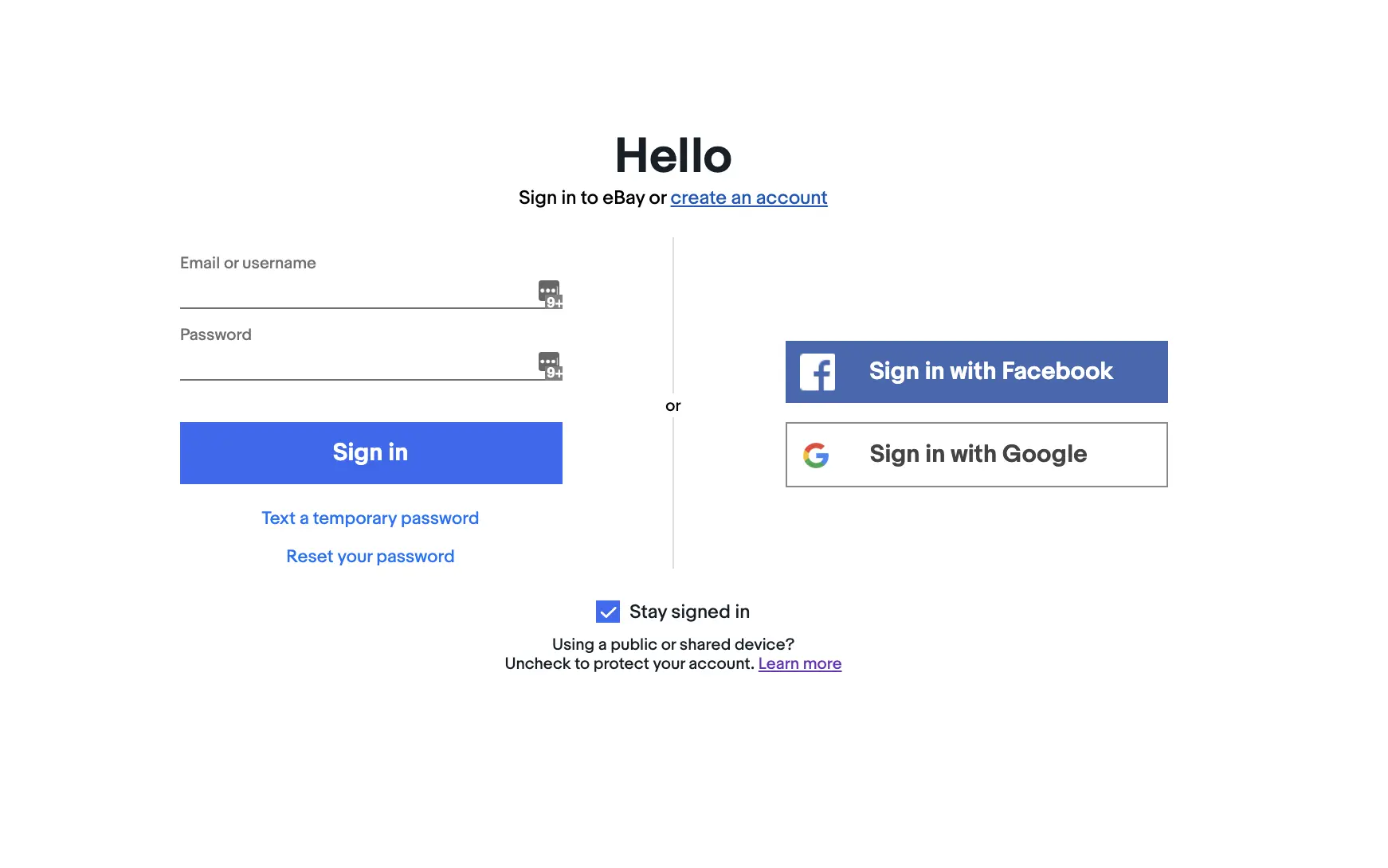
To block a buyer on eBay, visit the Block bidders or buyers page. Enter the member's username into the box (one per line, up to 5,000 names), and click Submit. The block is instant. Blocked users can't bid on your auctions, use Buy It Now, or send offers. They're still allowed to message you unless you open Buyer requirements in Seller Hub and activate the option to prevent blocked buyers from contacting you.
That takes care of one problematic account. This guide also shows how to find a username, set automatic buyer requirements to block less often, understand what blocking does not do, and how to unblock someone later.
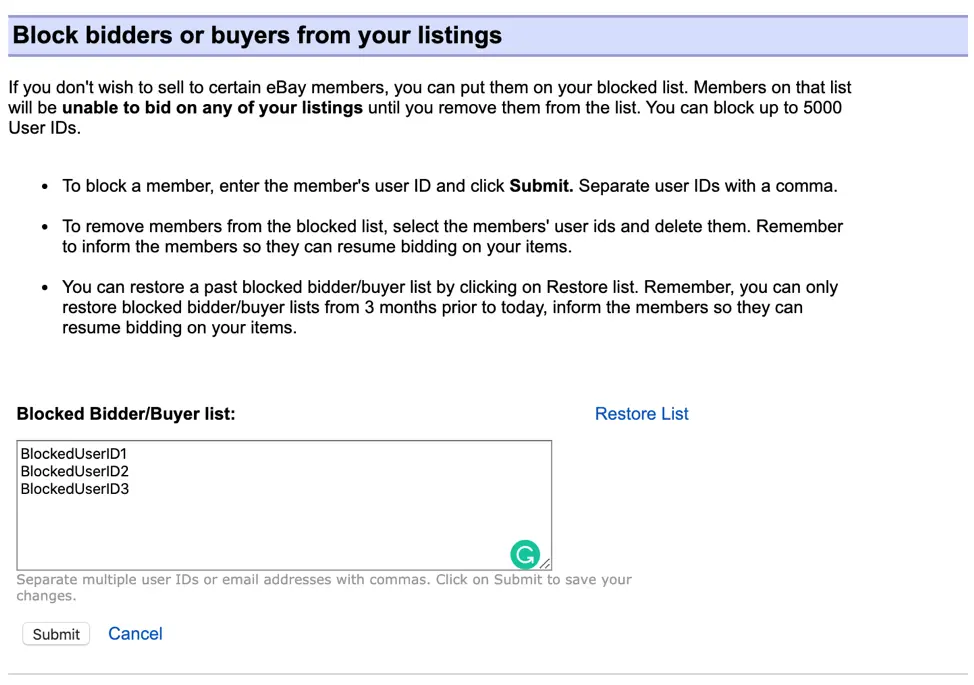
You can store up to 5,000 usernames on your block list. To remove someone, return to the same page, delete their name from the box, and submit again.
To block someone, you need their exact username, but eBay often hides parts of it for privacy. Here are the places to check:
Usernames on eBay are case-insensitive, so don't worry about capitalization when entering them into the block list.
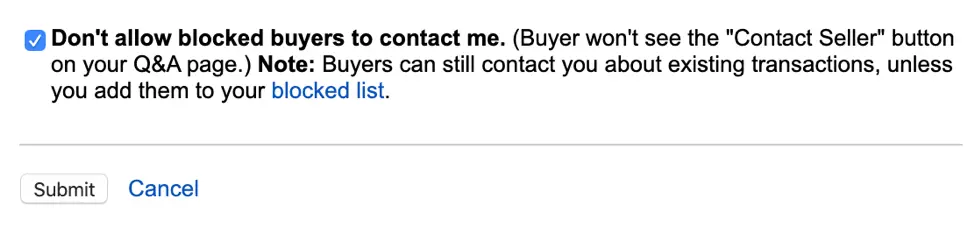
Blocking a buyer prevents purchases, but by default, eBay still lets them message you. If you're dealing with a harasser, go to Buyer requirements and check the box to stop members on your blocked list from contacting you. Save the change. This stops blocked usernames from starting new message threads.
If a buyer is making threats, using hate speech, or breaking eBay rules, blocking isn't enough. Report the member through eBay's reporting process so there’s a record if things escalate.
Blocking is a reactive measure, used after a buyer causes trouble. Buyer requirements, on the other hand, allow you to automatically stop certain accounts from buying, reducing the need to manage a block list manually.
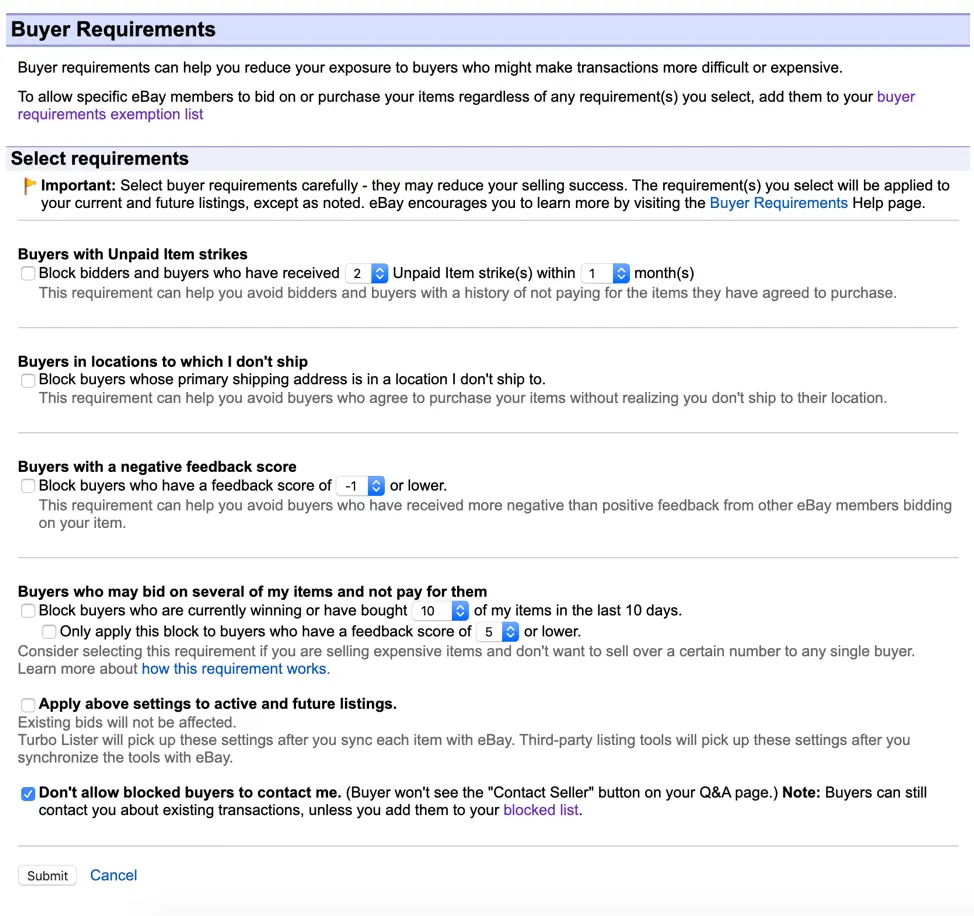
On the Buyer requirements page, you can block buyers who:
Set these once, and they apply to every listing. Use country and feedback filters carefully, though, as new buyers often have 0 feedback, and strict rules may turn away genuine sales.
Filters that are set too high can hurt sales while keeping impressions steady. A tiered approach is often better than a one-size-fits-all rule, as it balances risk with a larger buyer pool:
Switching from a "block all 0-feedback buyers" rule to this tiered setup generally reduces the number of cancelled and rebought orders and the routine of adding names to the block list. Once you've chosen rules, click Submit. Accounts that meet your criteria can't buy without contacting you first.
| Action | Effect After You Block |
|---|---|
| Bidding and Buy It Now | Blocked. They cannot purchase your items. |
| Best Offers | Blocked. They cannot send offers. |
| Messaging you | Still allowed unless you turn on the contact-block setting. |
| Viewing your listings | Still allowed. Blocking does not hide your items. |
| An order already placed | Not affected. Blocking is not retroactive, so cancel the order separately if needed. |
| Leaving you feedback | Still possible for transactions that already happened. |
Two limits to know: Blocking applies to your seller account, so a determined buyer can register a new account to get around it. It also doesn’t cancel existing sales. If a buyer you’d block has already bought something, deal with the order first, then add them to the list.
Many buyer issues in apparel aren't due to bad buyers but poor fit. If a "large" runs small, buyers might open a return or a "not as described" case, leave a negative review, and you'll be tempted to block them. According to the National Retail Federation, retail returns hit roughly 16.9% of total sales in 2024, and apparel leads because buyers can't try on clothing before it ships (NRF, 2024 Consumer Returns report). The best way to prevent fit-related returns isn't stricter buyer filters but providing flat-lay garment measurements in inches and centimeters directly on the listing.
Sizely is a web tool that lets online sellers create a size chart to embed directly into your eBay, Poshmark, Mercari, or Etsy listings. Choose from over 300 garment templates, enter your real measurements in inches and centimeters, and paste the chart into your listing. Used by over 85,000 sellers, Sizely aims to reduce size-related returns and disputes that create problematic buyers. Start at www.size.ly.
If you need to unblock a buyer, either due to a mistake or a resolved situation, it takes just a moment. Return to the Block bidders or buyers page, delete the username from the list, and hit Submit. The user can then buy from you again right away.
eBay doesn't notify buyers when they're blocked. They’ll only find out when they try to bid or buy, and get a message saying they can't purchase from this seller. The message won't reveal you as the one who blocked them.
Blocking doesn’t cancel a completed sale. The purchase still stands. If you don’t want to fulfill it, cancel the order through Seller Hub first, then add the username to your block list so they can't buy again.
Your block list can hold up to 5,000 usernames at a time. If you’re nearing that limit, it's usually a cue to use buyer requirements, which block entire account categories automatically instead of one name at a time.
No, the block list and buyer requirements are available on the desktop site under Account settings and Seller Hub. Use a computer browser or the mobile browser in desktop mode to access them.
No, blocking only stops future purchases and bids. Feedback from past transactions remains. To handle unfair feedback, use eBay's feedback revision or reporting process, not the block list.
Buyers skip listings when they cannot tell if it fits. Make a size chart image for your listings in about a minute with the free Size Chart maker, and check your margins with the eBay fee calculator. Selling from the UK? The eBay UK fee calculator covers Buyer Protection and business fees.
Run your own store too? Sizely's size tools tell shoppers their size right on your product pages.
Written by
Sophie's expertise in clothing measurement is unmatched. With more than five years of experience in the industry, her precision and attention to detail have greatly contributed to the development of Sizely's sizing solutions. Her work ensures that accuracy is never compromised, making her an integral part of the Sizely team.
More from the blog
Guides on how to measure yourself, read a brand's size chart, and convert sizes between brands and countries, so you order the right size the first time.
A seller's guide to canceling an eBay order, including the Seller Hub steps, the 30-day window, fee credits, and which reasons avoid an account defect.
Jason
July 11, 2026
A step-by-step 2026 guide to eBay's Time Away (vacation mode): where to find it, whether to pause or allow sales, what keeps running, and how to return.

Alize Mendez
July 11, 2026
A 2026 walkthrough of sending eBay invoices from Seller Hub, with combined shipping, managed-payments payout timing, and troubleshooting, sourced from eBay's help pages.
Jason
July 11, 2026

